
BY PHILIPP IVANOV, CEO & FOUNDER, GRASP
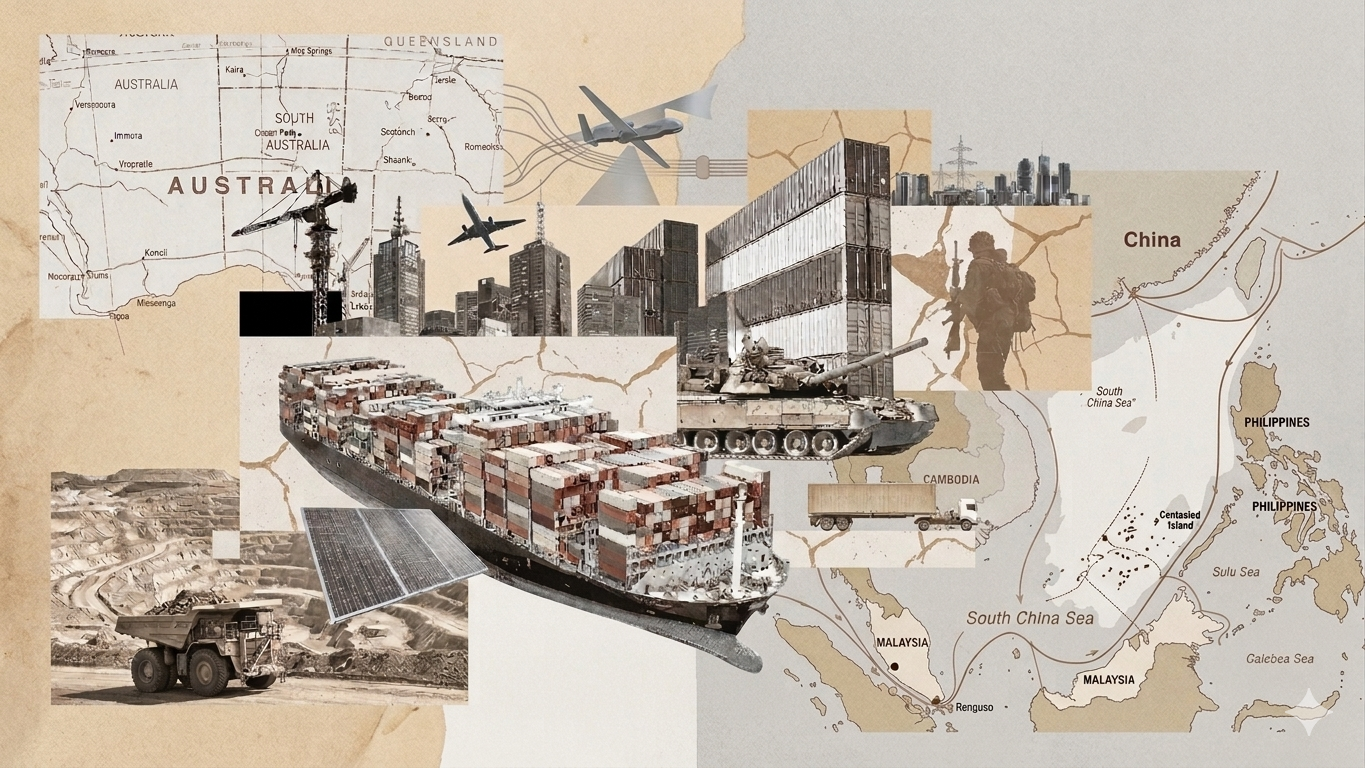
Australia's prudential regulators have finally told banks, insurers and super funds to treat geopolitical risk as an enterprise-wide risk discipline. The regulatory signal is overdue and welcome. And the hard work starts now.
This week, Australia took a quiet, but consequential step toward embedding geopolitical risk into the machinery of its financial system. On 17 June, the Australian Prudential Regulation Authority (APRA) wrote to every bank, insurer and superannuation fund it regulates - institutions holding over $9 trillion in assets - setting out minimum expectations for readiness against geopolitical shocks across six areas, from sanctions and market closure to foreign interference and insider threats. The same morning, the Reserve Bank of Australia's Brad Jones used a speech to the banking industry to make the case that the financial system has always sat downstream of the international order - and that order is fragmenting again.
What makes the intervention timely is the gap it names. APRA's own work shows that 70 per cent of regulated entities now rank geopolitical risk as a high or critical concern. Awareness is no longer the problem. Yet the regulator still found common gaps between the awareness and actual practice: from sanctions and market-closure scenarios being absent from investment strategies, to crisis drills and counter- insider threat plans being too shallow to give boards any confidence. APRA Chair John Lonsdale put it plainly - for a mid-size, trade-exposed economy, awareness is not enough.
This was a long time coming. Last year I wrote that for more than a decade since the seismic geopolitical shifts began, Australian business treated geopolitical risk as an intriguing conversation on the margins of board meetings. That is despite Australia being a canary in the geopolitical coalmine - uniquely exposed to the US–China competition, supply-chain interdependences and its own complex strategic geography.
This decade alone, Australia learnt the hard way what happens when geopolitics meets the balance sheet - from the China trade and diplomatic freeze to the energy shocks of the US–Iran conflict. There were lonely voices, like the Future Fund's Raphael Arndt, who urged the business community to prepare for a riskier world in the still relevant position paper on geopolitics and investment. While the Commonwealth steadily built a suite of policies in cyber, economic and research security – much of corporate Australia kept treating geopolitics as a sideshow. Hopefully APRA and the RBA have started a long process of closing this blind spot.
The hard work begins now. Integrating geopolitics, geoeconomics and geostrategy into institutional decision-making is notoriously difficult. Even the most geopolitically astute companies struggle to convert an avalanche of geopolitical data into a coherent, executable risk strategy - to distinguish the shocks that disrupt operations this quarter from the structural shifts that quietly upend the business model itself. This translation problem is precisely the work I spent my time on at GRASP. The message from regulators should focus minds: geopolitical resilience is not a one-off compliance exercise, but an iterative and ongoing capacity-building discipline.
Three mindset shifts now need to follow.
First, Australian business must invest in its own geopolitical muscle. Methodologies for resilience should be made in Sydney and Perth, not imported from Washington or London. Our strategic circumstances are distinctive, and only we can solve them.
Second, talent is critical. I have argued for years about the decline in our Asia literacy. We now have a second imperative (apart from the obvious need to know our neighbours and the world at large) to educate the next generation of Australians to make sense of the volatile and rapidly changing region and the world. Yet almost no Australian business school teaches geopolitical risk at any level and international relations graduates are finding it hard to secure good jobs in their disciplines, outside Canberra.
Third, boards must stop treating geopolitical risk as either a dinner conversation or fatalistic inevitability, and start interrogating their executives on geopolitical shock preparedness and the assumptions underwriting their models, while also looking hard at the opportunities this upheaval creates, for example - in critical minerals, energy and agriculture, as the world hunts for stability of supply and trading partners it can trust.
RBA’s Brad Jones in his speech reached back four centuries - to Westphalia, the Concert of Europe and Bretton Woods - to remind his audience that periods of stability are the exception, not the rule, and that finance and technology have become the contested terrain of the present change. Financial system is a lifeblood of our economy. His closing line was a warning: time is of the essence, and Australians are depending on the financial institutions and regulators to get this right.
APRA and the RBA's guidance is not an endpoint. Other regulators and industry bodies should follow. Our universities, themselves under geopolitical pressures, should step up in its education and research on geopolitical resilience. Australia works best as a team - government, industry and community moving in unison, as we did on other transformative issues, such as cyber security or gender equality. The business community has the time, the resources and now the mandate to position itself for an era of sustained uncertainty. Let's not waste the moment.
About the Author:
Philipp Ivanov is the Founder of GRASP. He is a strategist and advisor on geopolitical risk and foreign policy, with over two decades of executive experience across government, business, think tanks and universities in Australia, the United States, China, Asia and Russia. He is a trusted advisor to C-suite, university leaders and senior policymakers on risk, strategy, China, and major-power competition. A globally recognised analyst of China and China-Russia relations, Philipp has been published in New York Times, Financial Times, South China Morning Post, Bloomberg, CNBC, Foreign Policy, Washington Post, The Diplomat and The Australian Financial Review.
Disclaimer: The views and opinions expressed in this letter are solely those of the author and do not reflect the official views or positions of any entities he is employed by, advises and is affiliated with.
© GRASP, 2026